
Go West Young Man
During a recent weekend outing, I stopped into an antique mall and purchased several packs of old prints that were bundled together. Some of them were small 2.25 square contact prints, some were even smaller contact prints made from 127 film. And there was a set of 15 three inch square color prints with rounded corners. These 15 prints all had “December 1977” stamped on the back.
Taking a look at them, I could tell they were from some sort of road trip out west. Images of a road trip from 49 years ago sounds exciting! I decided to scan them in and do some research about this 1977 road trip. I used Google images and Gemini to figure out most of the locations and info.


These first two images were clearly shot in the St. Louis, MO area, which is either where the trip began or where the photographer first started taking images. There’s a clue later to what camera they used and also what kind of car they were driving, but for now it’s pretty easy to guess the film. Back in 1977, shooting 120 film, it was more than likely Kodak Vericolor II or Kodacolor II. Given the amount of fading its difficult to tell for certain, but I’m guessing it was Kodacolor II. Kodak put a lot of money into advertising Kodacolor II, and being a proprietary developing process (C-22), it also provided more money to Kodak since they supplied the proprietary chemicals to the labs. This type of developing process is no longer available, with standard C-41 process film winning that battle over time.


The images above show Busch Memorial Stadium, the Breckenridge Pavilion Hotel, and the historic Old Courthouse in downtown St. Louis. Busch Stadium is no longer there, having been demolished in 2005. But the Courthouse is still standing.
The Breckinridge Pavilion building is still there, but is now known as The Hilton. The building started as the Spanish Pavilion from the 1964-1965 New York World's Fair, which was brought to St. Louis at Broadway and Market/Walnut near Busch Stadium and opened in 1969. The original tourist attraction went bankrupt and closed within a year. Hotel developer Donald Breckenridge bought the property, built a 25-story tower atop and inside the structure, and reopened it as the Breckenridge Pavilion Hotel in 1976. So when this image was taken in 1977 this was probably a big deal and a notable attraction. The property eventually transitioned into a Marriott hotel and is now operating as the Hilton St. Louis at the Ballpark located at 1 S Broadway.
After they visited the Pavilion area, it looks like they made stops at two iconic St. Louis locations.
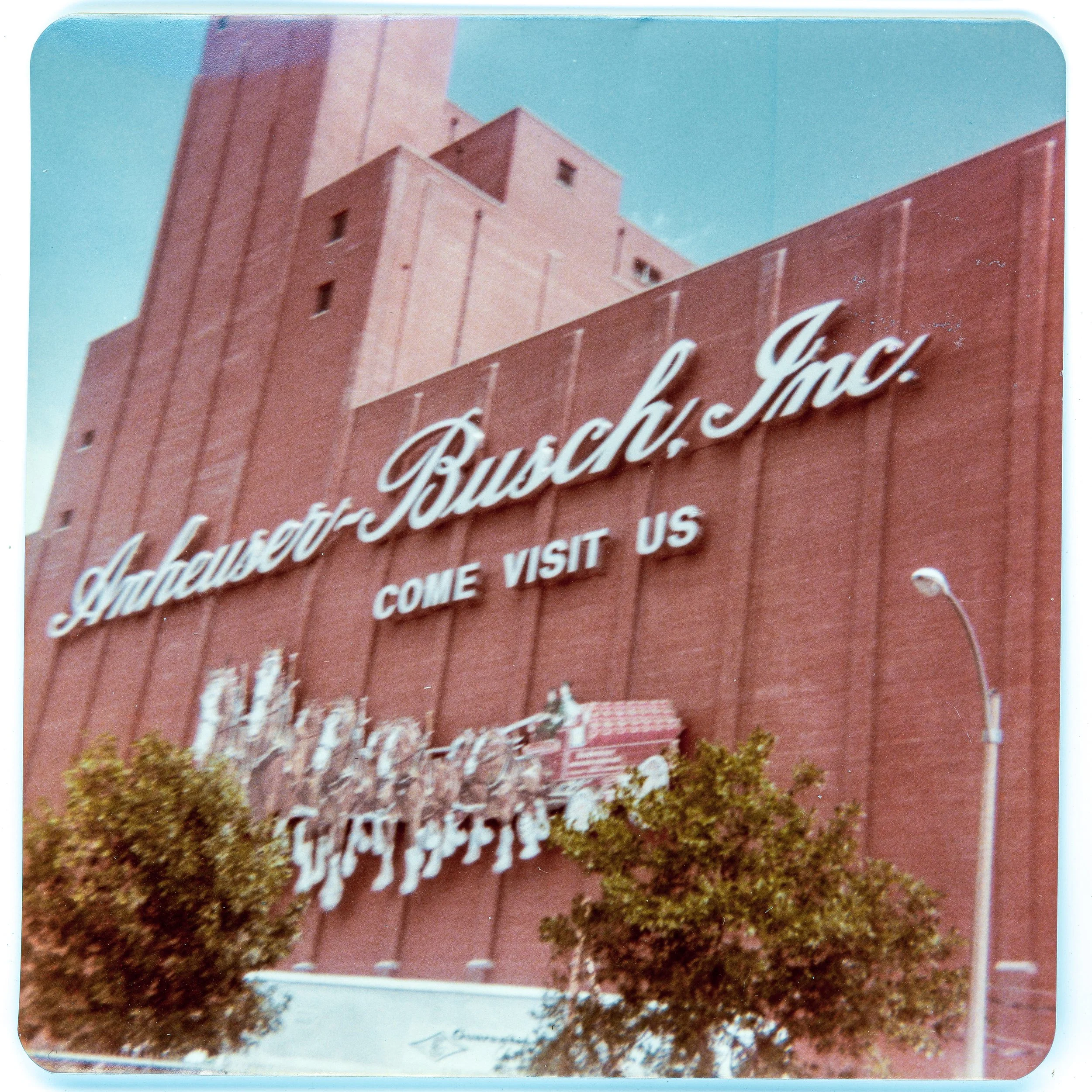

The image on the left above is the Anheuser Busch Brewery. It still looks much the same today as it did then. The fountain is a sculpture from Carl Milles named “Meeting of the Waters”. Meeting of the Waters is a figurative depiction of the Mississippi River, represented by the male figure, and the Missouri River, represented by the female figure. The water sprites, mermaids, and fish symbolize the seventeen main tributaries that enter into the two rivers. This is a rather impressive fountain that still is there today. To read more about it, check out the link for The Regional Arts Commission of St. Louis.


While in town, they made a stop at the historic Fremont School. The St. Louis Board of Education built Fremont School in 1896 in Benton Park, using designs and plans from August H. Kirchner. The school was named for John C. Frémont, the first Republican candidate for president. It operated as a school for many years until it was turned into senior living apartments. The building is still there today. To see more images and some more history, please check out this link with more info.
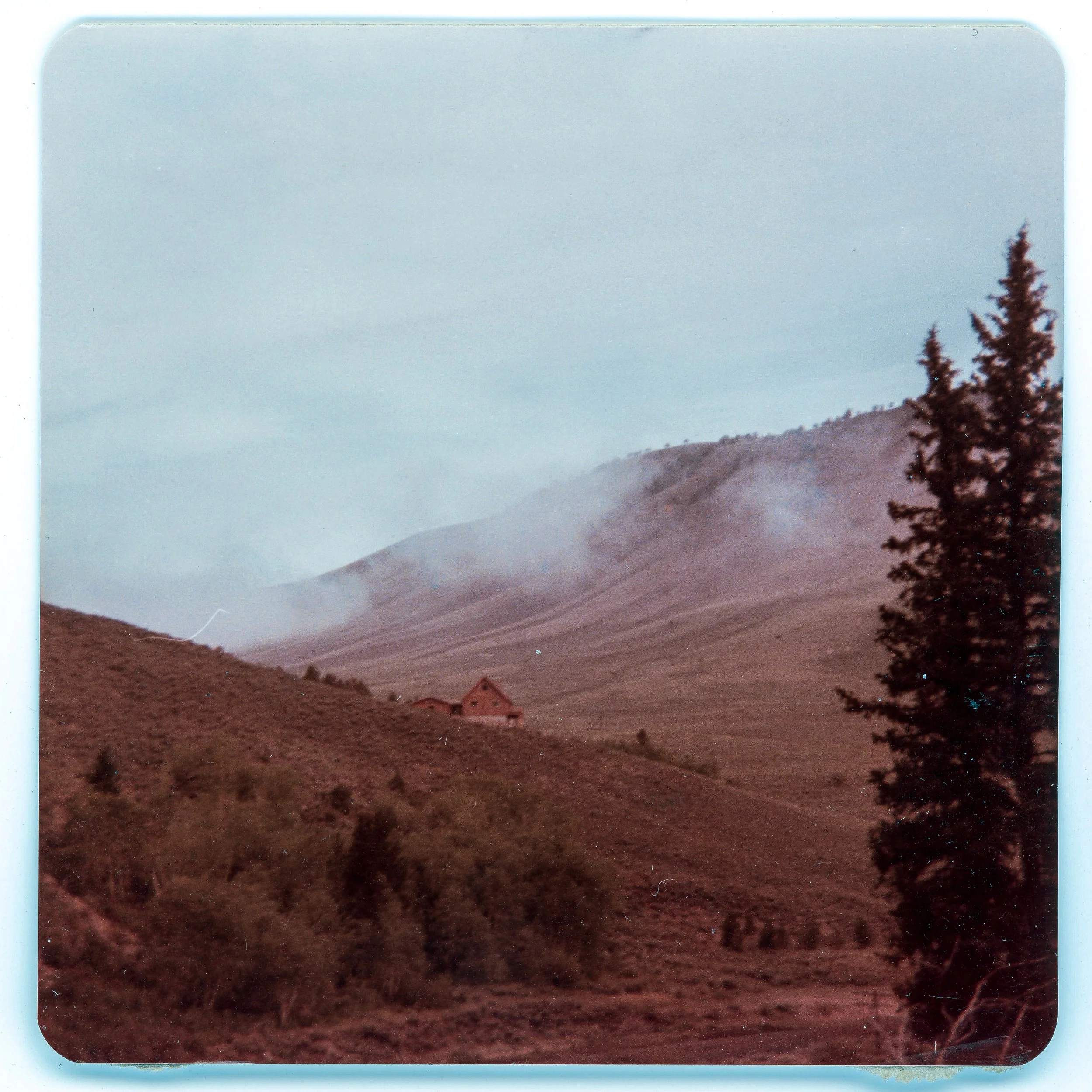
From St. Louis, it looks like they continued to head west toward Colorado.
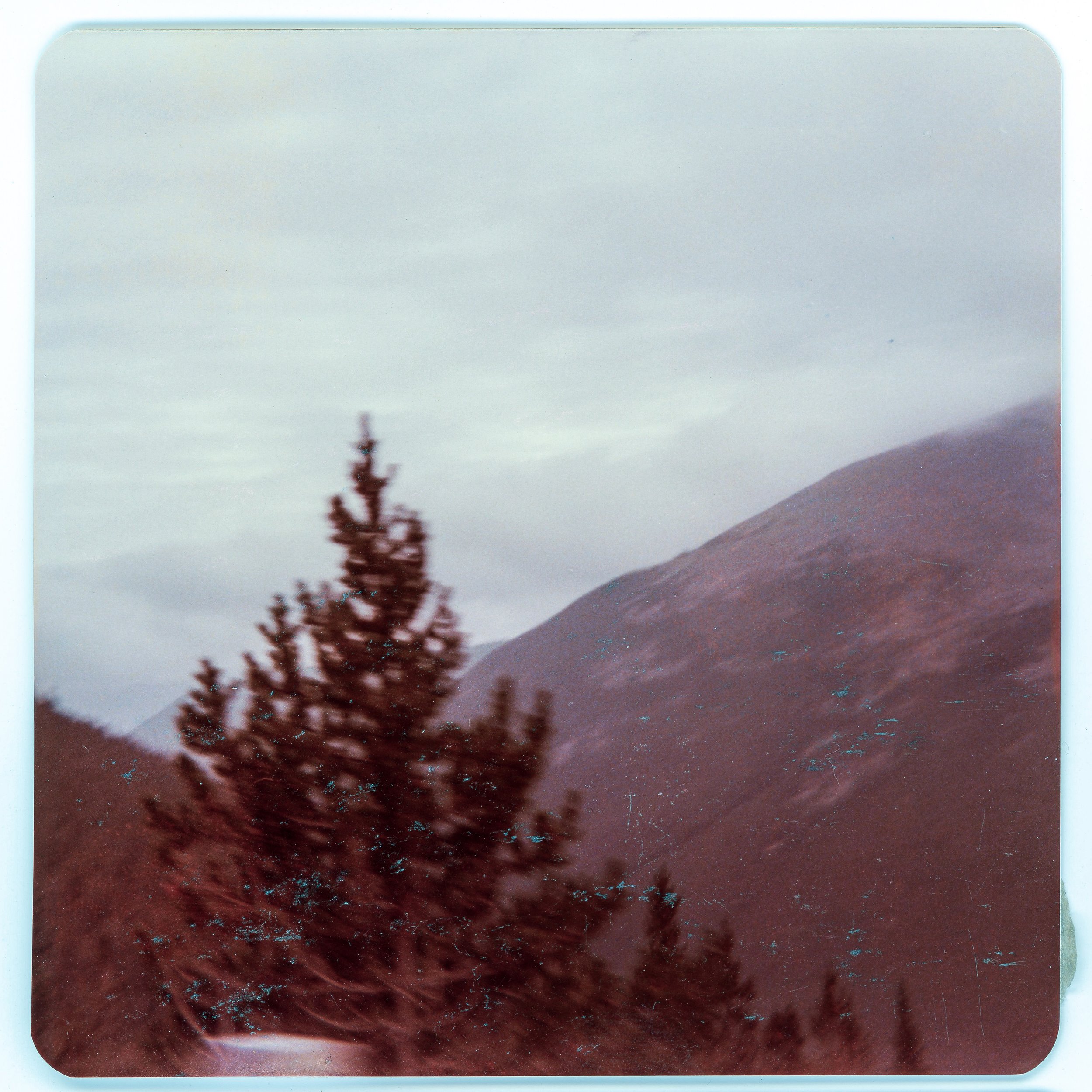
Next stop, the Rocky Mountains!

View today, courtesy of motorcyclecolorado.com
While the last two images were difficult to determine where exactly in the Rockies they were, the first image was very recognizable to Google Images. This is Clear Creek Valley looking down from Berthoud Pass along US Highway 40 in the Rocky Mountains in Colorado. The road has been improved to a larger, wider road with more pull-offs and rest areas, but the view is still the same. Whether the people on this 1977 roadtrip had this planned out or not, my imagination is that they happened upon this vista and took images seeing it for the first time ever, long before the days of Instagram and Tick-Tock.
The next image not only gave away their next location, it also helped Gemini figure out what type of car they were driving on their road trip, AND the camera the photographer was more-than-likely using. Sometimes its rare to get any info about the person behind the camera and other things going on, but this one image out of the 15 that were in the bundle gives a lot more info than thought at first glance.
1976 Monte Carlo in red. Image courtesy of classicautomall.com
This image was shot in the rugged Big Thompson Canyon along US Highway 34 in Colorado. This route was know for its hazardous conditions and lack of guardrails in the day. It was the route to get to Estes park, and originally built to help Loveland merchants who needed a bypass through the mountains. In 1976 there was a huge flood through the canyon that killed over 100 residents and visitors. Some were never found. This roadtrip happened the next year in 1977, so I would imagine that flood and deathtoll were on the minds of our travelers. Also, this image reveals a few other details. First, I have to applaud his choices in clothing. That shirt looks incredible. Next, with the help of Gemini and the clues left by the mirror shape, side window opening, and rear window we can determine the car was likely a Chevrolet Monte Carlo - one of the most popular American cars in 1977. There are also subtle hints that the car in this image was red. Lastly, this image gives us a hint at the camera being used. It’s clearly got an eyelevel viewfinder based on the way he is holding it in the reflection. This rules out any TLR that I was originally betting on - so no Kodak Brownie or Duaflex, and certainly no Rollei product. No, given the position of the camera to his eye and the little bit of black and silver we can see, I’m guessing this is some sort of folding 6×6 camera, more-than-likely one of the many Agfa cameras that were available in the 1950’s and 1960’s. It’s price in the 1970’s would be economical while still taking great trip images in the iconic 6×6 format.
The last image out of the set was identified by Gemini as being taken in Arizona, looking east toward Prescott Valley from on top of Glassford Hill.
So our explorers made it from at least the St. Louis, Missouri area to Prescott, Arizona during their road trip. I’m certain there were more images made but unfortunately, this is all we get to see. It would be amazing to hear the story behind this adventure, but like most old found film and images that I come across, I will probably never know.
If this trip seems familiar to you, or you heard about it from your family long ago, maybe this is a relative. If you do happen to know who took these images, I would love to know.
Thanks for reading, and have a great day!
Jeremy
Current image of the Hilton St. Louis from booking.com